





















 14 Min


Building an app like Uber in 2026 costs roughly $75,000 to $300,000 and up, depending on how much of Uber you actually need on day one. A focused, single-city ride-hailing minimum viable product (MVP) with rider and driver apps, live GPS tracking, and in-app payments lands in the $75,000 to $150,000 range, while a full multi-city platform with surge pricing, fraud detection, and deep compliance work climbs past $300,000. Demand is enormous: the global ride-hailing services market is projected to reach about USD 55.07 billion in 2026, according to Grand View Research. If you are tired of vague “it depends” quotes, this guide breaks the cost down module by module, shows what moves the number, and explains how artificial intelligence (AI) assisted coding has cut the price since 2023.
Key Takeaways
- A competitive Uber-style MVP (rider app, driver app, dispatch, live tracking, payments) typically runs $75,000 to $150,000.
- A full production-grade clone with surge pricing, multi-city ops, fraud systems, and compliance can exceed $300,000 and take a year or more.
- Real-time location, matching logic, and payments are the three biggest cost drivers in any ride-hailing build.
- AI and agent-assisted coding (Claude Code, Cursor) have cut 2020 to 2023 timelines and budgets by roughly half.
- Uber takes no app-store cut on rides, but if you add subscriptions or digital goods, Apple and Google claim up to 30 percent.
What You Are Actually Building When You Clone Uber
Uber looks like one app, but it is really three connected products: a rider app, a driver app, and an admin dispatch system that ties them together in real time. Add the backend that matches riders to drivers, calculates fares, processes payments, and tracks every car on a live map, and you can see why the number climbs fast. The good news is that you do not need all of Uber to launch. You need the slice that proves people will book and pay for rides in your market.
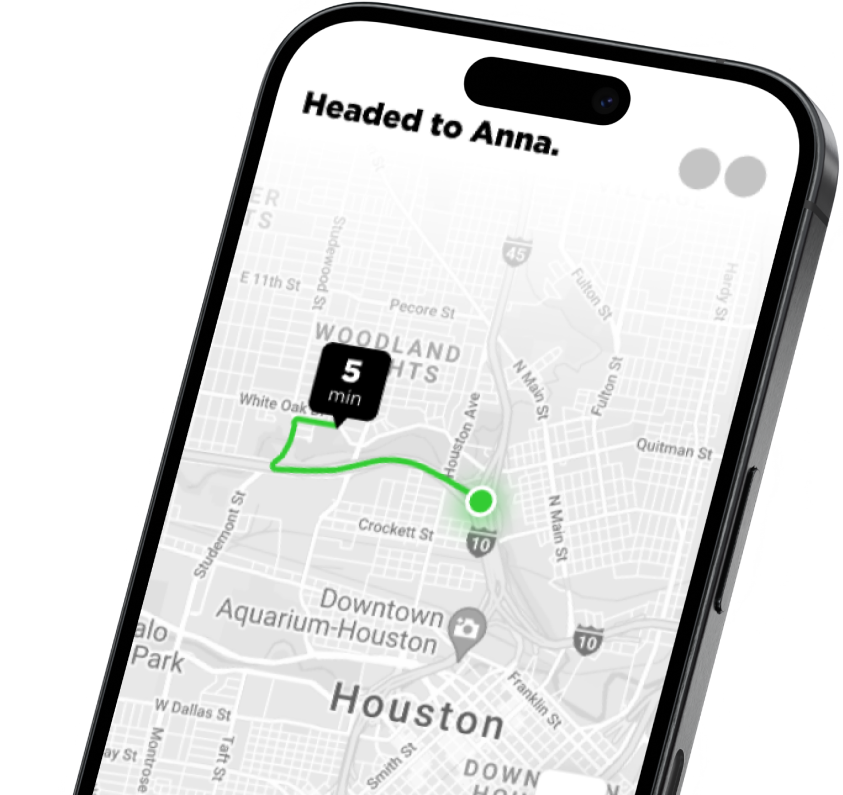
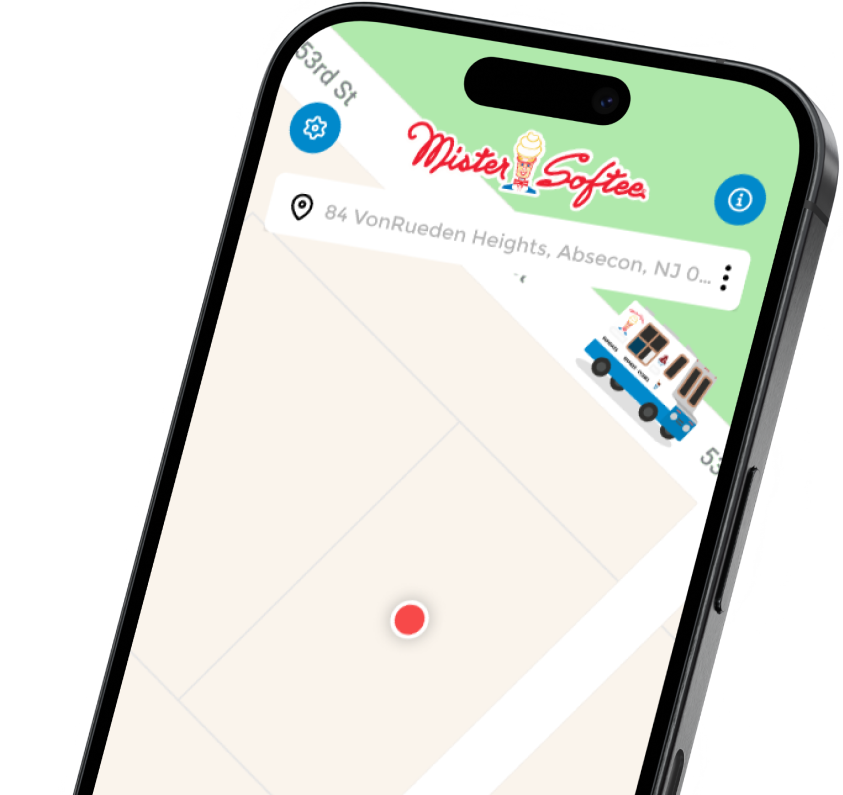
We have built this exact shape of product before. For Commute My Kids, we created a safe, scalable ride-scheduling platform for families with rider scheduling, driver assignment and confirmation, real-time messaging, and a centralized dashboard. For Currently (SparkCharge), we built an on-demand, rideshare-style dispatch system with geolocation, route planning, driver apps, subscriptions, and Stripe payments that splits funds across parties and pays drivers out. Both are smaller cousins of Uber, and together they show how live location, matching, and payments come together.
Get Your Free 45-Minute App Roadmap
Meet 1-on-1 with our senior product team. We’ll map your MVP or enterprise app and hand you a personalized plan—clear scope, a realistic timeline, and fixed monthly costs—for iOS & Android, web, tablets & wearables, and AI.
Uber Cost Breakdown by Module
The table below maps the major pieces of an Uber-style app to realistic 2026 cost bands for a US-led build. Bands assume a cross-platform React Native build with a shared backend. Your final number depends on how polished and how scalable each piece needs to be.
| Feature or module | What it covers | Estimated cost band |
|---|---|---|
| Rider app (iOS and Android) | Onboarding, booking, fare estimate, trip status, ratings | $15,000 to $35,000 |
| Driver app (iOS and Android) | Availability toggle, ride requests, navigation handoff, earnings | $15,000 to $35,000 |
| Real-time GPS and live tracking | Map integration, location streaming, estimated time of arrival (ETA) display, geofencing | $12,000 to $30,000 |
| Matching and dispatch engine | Rider-to-driver pairing, queueing, reassignment logic | $15,000 to $40,000 |
| Payments and payouts | Card payments, wallet, driver payouts, receipts (Stripe) | $10,000 to $25,000 |
| Admin and ops dashboard | Trip management, user controls, pricing, analytics | $12,000 to $30,000 |
| Ratings, reviews, and messaging | Two-way ratings, in-app chat, push notifications | $6,000 to $15,000 |
| Surge pricing and promotions | Dynamic pricing rules, coupons, referral credits | $8,000 to $25,000 |
| Backend, infrastructure, and security | APIs, database, cloud hosting, encryption, scaling | $20,000 to $60,000 |
A lean MVP cherry-picks from this list. You can launch with rider and driver apps, live tracking, a workable matching engine, payments, and a basic admin panel, then add surge pricing and advanced fraud tooling once you have real trips flowing. That staged path is how most successful ride-hailing startups actually reach market without burning their entire budget on version one.
What Moves the Cost Up or Down
Two ride-hailing apps with the same screen count can cost very differently. Here is what shifts the number.
- Real-time scale. Tracking 50 drivers is straightforward. Tracking thousands of cars across cities with sub-second updates demands serious backend engineering, and that work is where Uber-class budgets go.
- Matching sophistication. Nearest-driver matching is cheap. Predictive matching, pooling, and ETA optimization cost more because the logic is harder and needs heavy testing.
- Payments and payouts. Charging a rider is simple. Splitting fares, holding funds, paying drivers, and handling refunds and chargebacks adds compliance and accounting complexity.
- Regulation and insurance. Background checks, driver verification, insurance integrations, and local transport rules vary by city and add real cost in legal and engineering time.
- Design polish. A clean, trustworthy interface drives adoption. Custom animation, accessibility, and brand work raise the figure but pay back in retention. Our design team treats this as core, not cosmetic.
- Platform choice. A shared React Native codebase across iOS and Android is far more economical than two separate native teams, which is why we default to it. See our breakdown on the true cost of app development.
How AI and Agent Coding Cut the Price
The biggest change since 2023 is how software gets built. AI-assisted and agent-based coding tools such as Claude Code and Cursor now handle a large share of boilerplate, test scaffolding, and routine integration work. For data-heavy apps like ride-hailing, that means our senior engineers spend more time on the hard parts (matching logic, real-time scale, payment security) and less time on repetitive code. The practical result is that builds which would have taken twelve to eighteen months and a much larger budget in the 2020 to 2023 era now ship in roughly half the time and at a meaningfully lower cost. We pair these tools with experienced US-led oversight so speed never comes at the expense of quality. You can see how we work in our proven process.
The Apple and Google Question
Uber itself pays no app-store commission on a ride, because transportation is a real-world service rather than a digital good. Apple and Google only take their cut (up to 30 percent, often 15 percent for smaller developers and year-two subscriptions) on digital purchases made inside the app. So if your ride-hailing app stays focused on real-world rides paid through Stripe or a similar processor, the stores take nothing. The moment you add a paid subscription tier, in-app credits, or other digital goods, plan for that commission in your unit economics. It is a pricing decision worth making early.
Frequently Asked Questions
How much does it cost to build an app like Uber in 2026?
A competitive ride-hailing MVP with rider and driver apps, live tracking, matching, and payments typically costs $75,000 to $150,000. A full, multi-city production clone with surge pricing, fraud detection, and deep compliance can exceed $300,000. The right number depends on how much of Uber you need at launch versus later.
Can I build a cheaper MVP first?
Yes, and most smart founders do. You launch with the core loop (book a ride, match a driver, track it live, pay in app) in one city, prove demand, then reinvest in surge pricing, pooling, and scale. This staged approach controls risk and gets you real user data before you spend on advanced features.
How long does it take to build an Uber-style app?
A focused MVP generally takes about four to seven months from kickoff to launch. A full-scale platform can run a year or more. AI-assisted coding has compressed these timelines roughly in half compared to the 2020 to 2023 era, though real-time and payment systems still require careful, unhurried engineering.
What is the most expensive part of a ride-hailing app?
The backend that handles real-time location at scale, the rider-to-driver matching engine, and the payment and payout system are the three biggest cost drivers. These are the parts that must work flawlessly under load, so they justify the most engineering and testing investment.
Do I have to pay Apple and Google 30 percent?
Not on the rides themselves. App stores do not take a cut of real-world services like transportation paid through an outside processor. The 30 percent (or 15 percent) commission only applies to digital goods such as paid subscriptions or in-app credits, so it depends on how you choose to monetize.
Why use React Native instead of two native apps?
React Native lets you share one codebase across iOS and Android, which cuts build cost and ongoing maintenance significantly while keeping near-native performance. For rider and driver apps that need to launch on both platforms at once, it is usually the most economical path, which is why we build with it.
Can Chop Dawg build my Uber-style app end to end?
Yes. We handle strategy, UI/UX design, development, QA, launch, and ongoing support under fixed-monthly pricing. Chop Dawg is United States headquartered and United States led, with American product and project management, senior development, design, QA, and marketing. We pair that leadership with an in-house Brazilian design team and in-house development, QA, and project management teams in Pakistan and India. Everyone is in-house and assigned directly to your project, with no middleman and no subcontractors. You can choose a fully American team or a cost-effective United States plus offshore blend with the same quality, timelines, and experience, and the fully American option is there for government or regulated work. We have shipped ride-scheduling and on-demand dispatch products like Commute My Kids and Currently, so the core mechanics are familiar territory for our team.
Let Us Map Your Ride-Hailing Build
Every great ride-hailing app started as a focused version one that proved the model. With 17-plus years, 500-plus products launched, and more than 300 five-star reviews across trusted directories like Clutch, GoodFirms, G2, Google, and TopDevelopers, Chop Dawg can help you scope the right MVP and a clear path to scale. Organizations that have trusted Chop Dawg include NASA and Hilton, alongside the venture-backed founders we help reach launch. Whether you are a founder validating a brand-new idea or an established company looking to launch a new line, modernize a legacy fleet system, or extend an existing platform, bring it to a free 45-minute consultation. We will walk through your feature list, give you an honest range, and show you exactly where your budget should go first. Let us Make It App’n.




 21 Min