






 15 Min

Building a music streaming app like Spotify in 2026 costs between $75,000 and $150,000 for a focused streaming minimum viable product (MVP), and $200,000 to $400,000+ for a full production clone with offline playback, social features, podcasts, recommendations, and cross-device sync. The build cost is only part of the story, because music streaming is uniquely licensing-heavy: you cannot legally stream songs without rights agreements, and those carry ongoing royalty costs that dwarf many development line items. The market is massive: the global music streaming market is projected to reach USD 62.5 billion in 2026, according to Grand View Research, and Spotify alone reported 290 million paid subscribers as of Q4 2025. The pain point is that founders budget for the app and forget the licensing and infrastructure that make streaming viable. This guide gives you both the lean MVP price and the honest full-build price, plus what moves the number.
Key Takeaways
- A focused streaming MVP costs $75,000 to $150,000; a full Spotify clone with recommendations, social, podcasts, and offline runs $200,000 to $400,000+.
- Music licensing is the defining cost, and it is mostly ongoing royalties, not a one-time development line, so it must be modeled into your business plan from day one.
- Audio streaming infrastructure, a recommendation engine, and cross-device sync are the biggest engineering cost drivers, not the play button.
- Apple and Google take up to 30% of in-app subscriptions (15% after a year), which reshapes pricing and is exactly why some streaming apps push web signup.
- Artificial intelligence (AI) and agent-assisted coding (Claude Code, Cursor) have cut 2020 to 2023 build costs and timelines by roughly half, so a serious streaming MVP ships in months.
What Actually Drives the Cost of a Streaming App
The audio player is the easy part. The expensive parts are the streaming infrastructure that delivers millions of tracks reliably at low latency, the recommendation engine that makes the product feel personal, and the cross-device sync that lets a song follow you from phone to laptop to speaker. On top of all that sits the cost no developer can code away: music licensing. To stream copyrighted music legally, you need agreements with rights holders, and those typically mean per-stream royalties and minimum guarantees. That ongoing cost shapes your entire business model and is why music streaming is one of the toughest categories to make profitable, separate from what it costs to build the app.
Here is a realistic module-by-module breakdown for a 2026 cross-platform streaming app built on React Native with a cloud backend and content delivery network (CDN). The low end of each band reflects a lean MVP version; the high end reflects a polished, production-grade implementation. Note that licensing and royalties are a business cost layered on top of these engineering bands.
| Module | What it includes | Cost band |
|---|---|---|
| Onboarding and profiles | Sign-up, social login, taste preferences, library setup | $6,000 to $15,000 |
| Audio streaming infrastructure | Adaptive bitrate streaming, CDN delivery, background playback | $18,000 to $50,000 |
| Music catalog and metadata | Catalog ingestion, search, artist/album/track data, rights metadata | $12,000 to $35,000 |
| Player and playback controls | Play, queue, crossfade, lyrics, equalizer, gapless playback | $10,000 to $25,000 |
| Playlists and library | Create/edit playlists, likes, follows, collaborative playlists | $8,000 to $22,000 |
| Recommendation engine | Personalized mixes, discovery, radio, daily playlists | $15,000 to $45,000 |
| Offline downloads | Secure offline caching, download management, license enforcement | $10,000 to $28,000 |
| Cross-device sync and casting | Multi-device continuity, casting to speakers/TV, handoff | $12,000 to $32,000 |
| Social and sharing | Friend activity, sharing, collaborative sessions, profiles | $10,000 to $28,000 |
| Podcasts or video add-ons | Podcast hosting/playback, video, additional content types | $15,000 to $40,000 |
| Subscriptions and paywall | Free/ad-supported tier, premium tiers, in-app purchase plumbing | $10,000 to $25,000 |
| Backend, infrastructure, QA | APIs, media storage, scaling, security, cross-platform testing | $25,000 to $70,000 |
A lean MVP funds onboarding, streaming infrastructure, catalog and search, the player, playlists, subscriptions, and backend at the lower end, then ships. A full clone funds the recommendation engine, offline, cross-device sync, social, and podcasts on top. That is the honest range from $75,000 to $400,000+, and it is why we prioritize the features that prove your concept first in our proven process.
Licensing Is the Cost That No Code Removes
If you take one thing from this article, take this: the hardest cost in music streaming is not engineering, it is rights. You cannot legally stream copyrighted songs without licensing agreements, and those generally mean per-stream royalties plus minimum guarantees that scale with usage. This is a continuing business expense, not a one-time build cost, and it is the main reason even Spotify operates on thin margins. Many founders sidestep this early by launching with independent or royalty-free catalogs, original creators, or a narrow niche, then negotiating broader licensing as they grow. Whatever path you choose, licensing must be in your financial model from the start, because it will likely be your largest line item over time.
Get Your Free 45-Minute App Roadmap
Meet 1-on-1 with our senior product team. We’ll map your MVP or enterprise app and hand you a personalized plan—clear scope, a realistic timeline, and fixed monthly costs—for iOS & Android, web, tablets & wearables, and AI.
The Apple and Google 30% Reality for Streaming Apps
Streaming apps monetize through subscriptions, and Apple and Google take up to 30% of in-app subscription revenue, dropping to 15% after a year. Stacked on top of music royalties, that commission can make in-app subscriptions barely viable, which is exactly why some streaming services steer new users to sign up on the web. This is not a development cost, but it must shape your pricing and signup strategy from day one. We design the monetization and signup flow with these economics in mind so your model holds up at scale.
How AI and Agent Coding Cut the Number
Most streaming-app cost estimates online reflect 2020 to 2023 pricing and run high today. Agent-assisted coding tools like Claude Code and Cursor, in the hands of senior engineers, accelerate the boilerplate, streaming and catalog integration work, and test coverage these apps require, cutting build costs and timelines by roughly half versus the pre-AI era. The caveat is that AI accelerates a strong team but does not replace the human engineering judgment that keeps low-latency streaming and rights enforcement working correctly. That blend of senior craft and modern tooling is how we keep quotes honest. See our full app development costs and pricing for more.
MVP First, Then the Full Clone
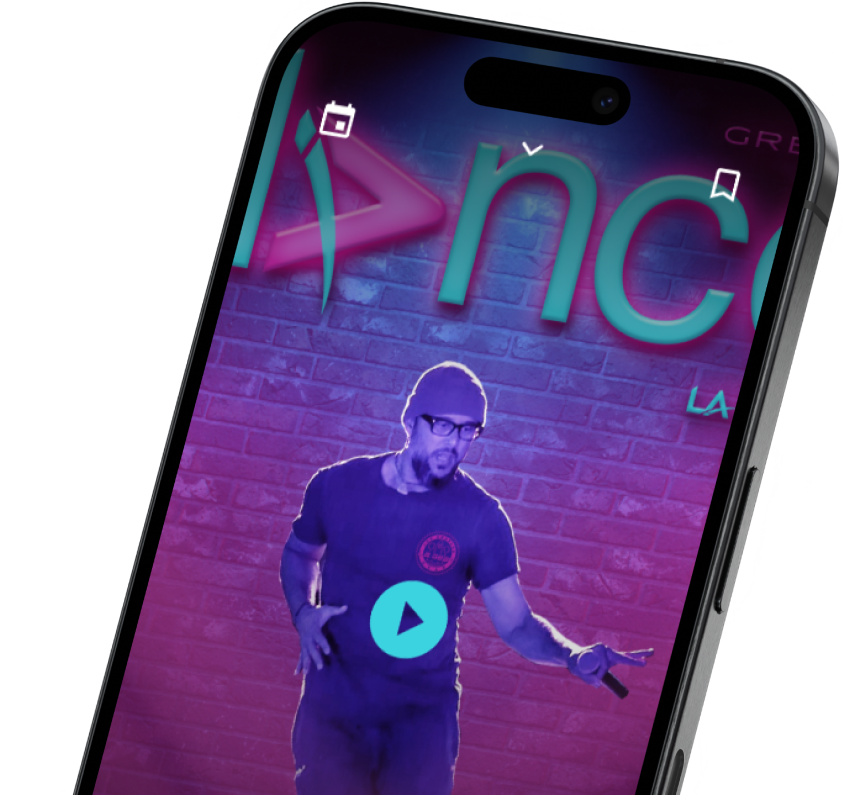
You do not need a full recommendation engine, podcasts, and casting to launch. You need reliable streaming, search, playlists, and a subscription flow, plus a licensing path you can actually afford. A focused MVP at $75,000 to $150,000 delivers that and proves people will listen and pay. Once you see engagement and revenue, you reinvest into personalization, offline, social, and cross-device sync, the features that drive loyalty. This staged, design-led approach is how we build content and media platforms. In our LA Gear success story, we built a media-rich mobile experience that engaged a global dance community, the same blend of content delivery, discovery, and polished UX a streaming app depends on. In our Kitchen Stage success story, we built a content-and-community platform with personalized feeds, search and discovery, and social engagement, the recommendation and library mechanics that keep a streaming audience coming back. One honest reminder before you build: the app is only half the equation. A streaming service needs content people actually want and an audience that knows it exists, so plan a real budget for catalog, artist and label relationships, and marketing to seed and grow your listener base, not just for engineering.
We build on React Native with native modules for smooth, low-latency playback, backed by a media pipeline and CDN built to scale. Chop Dawg is a partner, not an agency. We are United States headquartered and United States led, with American leadership, product and project management, senior development, design, QA, and marketing, plus an in-house Brazilian design team and in-house development, QA, and project management teams in Pakistan and India. Everyone is in-house and assigned directly to you, so you get direct access to the real senior team rather than a sales rep and faceless contractors. Pick a fully American team or a cost-effective United States plus offshore blend with the same quality and timelines, all on fixed-monthly pricing, and you own all the code and intellectual property (IP) from day one.
Frequently Asked Questions
How much does it cost to build an app like Spotify in 2026?
A focused streaming MVP with reliable playback, search, playlists, and subscriptions costs $75,000 to $150,000. A full clone with recommendations, offline, social, podcasts, and cross-device sync runs $200,000 to $400,000 or more. Separately, music licensing carries ongoing royalty costs that often exceed development spend over time.
Why is music licensing such a big factor in streaming app cost?
You cannot legally stream copyrighted music without rights agreements, which generally mean per-stream royalties and minimum guarantees that grow with usage. That is an ongoing business cost, not a one-time build expense, and it is the main reason streaming is hard to make profitable. Many founders start with independent or royalty-free catalogs and expand licensing as they scale.
How long does it take to build a music streaming app?
A lean MVP typically takes five to eight months, because streaming infrastructure and catalog handling take time to build and test. A full-featured clone takes ten to sixteen months. AI-assisted coding has cut these timelines by roughly half versus a few years ago, though low-latency streaming and rights enforcement still require careful engineering.
How does the Apple and Google 30% commission affect a streaming app?
Apple and Google take up to 30% of in-app subscription revenue (15% after a year). Stacked on top of music royalties, that commission can make in-app subscriptions barely profitable, which is why some services push web signup. It is not a build cost, but it must shape your pricing and signup strategy from the start.
Should I build a streaming MVP first or a full-featured app?
Build an MVP first. Prove that users will stream and subscribe with reliable playback, search, playlists, and an affordable licensing path before investing in recommendations, offline, and social features. Launching with every feature at once sharply increases cost and risk, especially given the licensing overhead unique to music streaming.
Can AI reduce the cost of building a streaming app?
Yes, when applied by senior engineers. Agent-assisted tools like Claude Code and Cursor speed up integrations, boilerplate, and testing, cutting build costs and timelines by roughly half versus 2020 to 2023. But low-latency streaming and rights enforcement require human judgment, so AI accelerates a strong team rather than replacing it.
Ready to Build Your Streaming App?
Music streaming rewards a clear plan and punishes guesswork, especially on licensing and economics. In a free 45-minute consultation, we will map your must-have features, talk through your licensing and monetization path, and give you an honest MVP-versus-full-build cost range, with no pressure and no obligation. Whether you are a founder with a brand-new streaming concept or an existing label, broadcaster, or content company adding on-demand audio or video, modernizing a legacy player, or extending a platform you already run, we can help. Chop Dawg has launched 500+ products used by more than a billion people over 17+ years, including content-rich media platforms, with 300+ five-star reviews across trusted directories like Clutch, GoodFirms, G2, Google, and TopDevelopers. Media partners that have trusted Chop Dawg include FOX Sports and the NFL, the kind of audiences that live on fast, reliable content delivery. Book your free 45-minute consultation and let’s turn your streaming app vision into a real, launchable product.

 15 Min