













 15 Min

Building an app like Instagram in 2026 costs roughly $60,000 to $250,000 and up, with the number set by how much of the Instagram experience you ship on day one. A focused photo-and-video social minimum viable product (MVP) with profiles, a feed, posting with filters, likes, comments, and follows lands in the $60,000 to $130,000 range, while a full platform with Stories, Reels-style short video, direct messaging, recommendation feeds, and content moderation at scale climbs past $250,000. The audience is staggering: there were about 5.79 billion social media user identities worldwide in early 2026, according to DataReportal’s Digital 2026 report. If you keep getting vague quotes, this guide breaks the build down module by module, shows what moves the cost, and explains how artificial intelligence (AI) assisted coding has lowered the price since 2023.
Key Takeaways
- A focused Instagram-style MVP (profiles, feed, posting with filters, likes, comments, follows) typically runs $60,000 to $130,000.
- A full platform with Stories, short video, direct messaging, and recommendation feeds can exceed $250,000.
- Media handling, the feed and recommendation engine, and moderation are the biggest cost drivers in a social app.
- AI and agent-assisted coding (Claude Code, Cursor) have roughly halved 2020 to 2023 build timelines and budgets.
- Instagram earns from ads, but if your app sells subscriptions or digital goods in-app, Apple and Google take up to 30 percent.
What You Are Actually Building When You Clone Instagram
Instagram looks simple, but underneath it is a media-heavy social platform: user profiles, a personalized feed, photo and video uploads with editing and filters, likes, comments, follows, notifications, and a recommendation engine that decides what each person sees. At scale, it also needs content moderation and a backend that can store and serve enormous volumes of media fast. Those media and feed systems, not the camera filters, are where the budget concentrates. The encouraging part is that a strong social MVP is very achievable, and you can add the heavier features once you have an engaged audience.
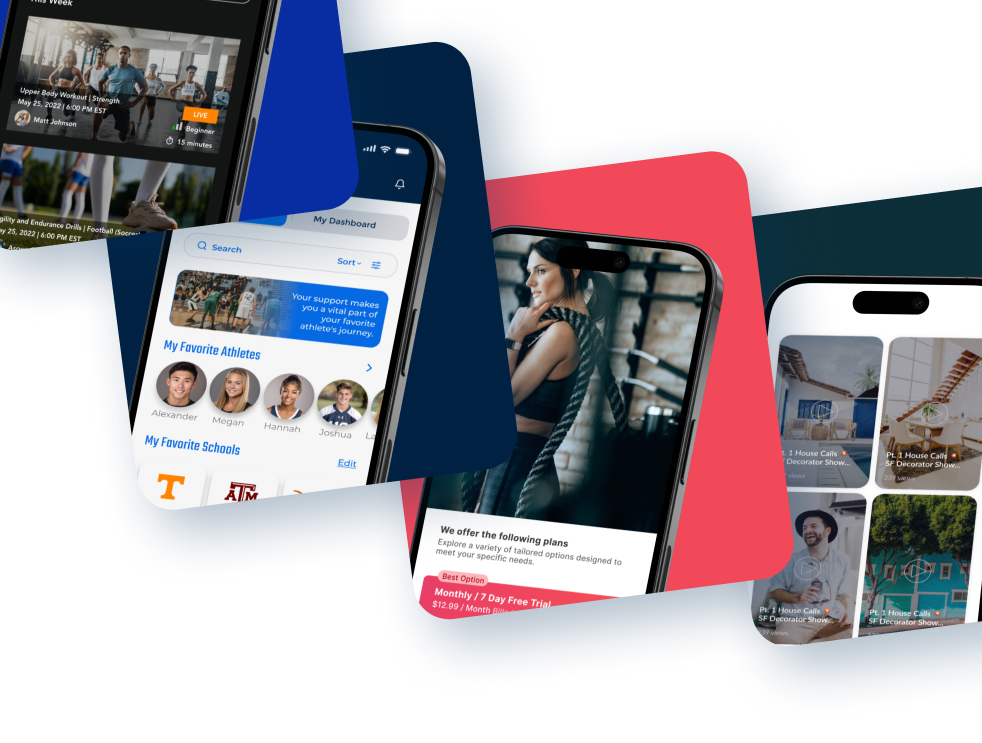
We have built social and community products with these exact mechanics. For Cuzzo, the live sports trivia app from Philadelphia media personality Anthony Gargano, we built real-time competitions, in-app chat and social interactions, dynamic leaderboards, loyalty points, and a content admin portal, and it reached 50,000-plus users in its first month with a 4.9 average rating across more than 10,000 reviews. For GarGar, we built a community platform that connects people through authentic recommendations, with profiles, social feeds, and discovery at its core. The real-time feeds, profiles, social interaction, and engagement loops behind both are the same primitives that make a photo-sharing app work.
Instagram Cost Breakdown by Module
The table below maps the major pieces of an Instagram-style app to realistic 2026 cost bands for a US-led, cross-platform React Native build with a shared backend. Your final number depends on how polished and how scalable each piece needs to be.
| Feature or module | What it covers | Estimated cost band |
|---|---|---|
| Accounts and profiles | Sign-up, login, profile pages, follow and following lists | $8,000 to $20,000 |
| Photo and video upload | Capture, upload, compression, filters and basic editing | $12,000 to $30,000 |
| Feed and timeline | Personalized feed, infinite scroll, caching, refresh | $12,000 to $35,000 |
| Engagement (likes, comments, shares) | Reactions, threaded comments, sharing, saves | $8,000 to $20,000 |
| Stories and short video | Ephemeral posts, vertical video player, viewer tracking | $15,000 to $40,000 |
| Direct messaging | One-to-one and group chat, media sharing, presence | $12,000 to $30,000 |
| Notifications and discovery | Push notifications, search, explore, hashtags | $10,000 to $25,000 |
| Recommendation and ranking | Feed ranking, suggested accounts, trending logic | $15,000 to $40,000 |
| Moderation and admin | Reporting, content filtering, admin dashboard, analytics | $10,000 to $30,000 |
| Backend, media storage, and security | APIs, media content delivery network (CDN), database, encryption, scaling | $20,000 to $55,000 |
An MVP picks the core: accounts and profiles, photo and video upload with filters, a feed, engagement, notifications, and a basic admin and moderation panel. You can add Stories, direct messaging, and a sophisticated recommendation engine once you have an active community. That staged build is how most social apps reach launch without overspending on version one.
One honest caveat worth saying out loud: building the app is only half the equation. A social product is only as good as the people in it, so your real work after launch is seeding the first community, giving early users a reason to post, and distributing the app to the right audience. Plan a marketing, creator, and growth budget alongside the build, because the most beautiful feed in the world is empty without people filling it.
What Moves the Cost Up or Down
Two social apps with the same screen count can cost very differently. Here is what shifts the number.
- Media at scale. Serving photos and especially video to a large audience requires a content delivery network, smart compression, and storage strategy. This is the single biggest factor that separates a hobby app from a real platform.
- The recommendation engine. A simple chronological feed is cheap. A personalized, ranked feed that learns from behavior costs more because it involves data pipelines and tuning, and it is what keeps users engaged.
- Real-time features. Direct messaging, live presence, and instant notifications add backend complexity that a read-only feed does not.
- Moderation and trust. Once strangers post publicly, you need reporting, filtering, and moderation tooling. This is essential for safety and brand protection and adds cost as you grow.
- Design polish. Social apps live or die on feel: smooth scrolling, fast media, delightful interactions. Custom design and accessibility raise the figure and pay back in retention. Our design team treats this as core.
- Platform choice. A shared React Native codebase across iOS and Android is far more economical than two native teams. See our app development cost breakdown.
Get Your Free 45-Minute App Roadmap
Meet 1-on-1 with our senior product team. We’ll map your MVP or enterprise app and hand you a personalized plan—clear scope, a realistic timeline, and fixed monthly costs—for iOS & Android, web, tablets & wearables, and AI.
How AI and Agent Coding Cut the Price
The biggest change since 2023 is how the software gets built. AI-assisted and agent-based coding tools such as Claude Code and Cursor now handle a large share of boilerplate, test scaffolding, and routine integration work. For a feature-rich social app, that lets our senior engineers concentrate on the hard parts (media delivery, feed ranking, real-time messaging) instead of repetitive code. The practical result is that a build which would have taken twelve to eighteen months and a larger budget in the 2020 to 2023 era now ships in roughly half the time at a meaningfully lower cost. We pair these tools with experienced US-led oversight so speed never costs quality. See our proven process.
The Apple and Google Question
Instagram makes its money from advertising, which is why the app is free and the stores take nothing on an ad. Apple and Google take their cut (up to 30 percent, often 15 percent for smaller developers and year-two subscriptions) only on digital goods sold inside the app. So if your social app monetizes through ads or real-world commerce, app-store fees may not touch you. If you sell a premium subscription, paid badges, creator tips, or other digital goods, plan for that commission from the start, because it directly shapes your revenue model.
Frequently Asked Questions
How much does it cost to build an app like Instagram in 2026?
A focused photo-and-video social MVP with profiles, a feed, posting, and engagement typically costs $60,000 to $130,000. A full platform with Stories, short video, direct messaging, and a recommendation engine can exceed $250,000. The figure depends on how much of Instagram you launch with versus add later.
Can I build a cheaper MVP first?
Yes, and it is the right move. Launch with profiles, posting with filters, a feed, and engagement for a specific community, prove that people post and return, then add Stories, messaging, and ranking. This staged approach controls risk and gives you real engagement data before you invest in heavier features.
How long does it take to build an Instagram-style app?
A focused social MVP generally takes about four to seven months from kickoff to launch. A full platform with video and recommendations can run a year or more. AI-assisted coding has roughly halved these timelines versus the 2020 to 2023 era, though media and real-time systems still need careful engineering.
What is the most expensive part of a social app?
Media handling at scale (storing and serving photos and video fast through a content delivery network) and the recommendation engine that personalizes each feed are the biggest cost drivers. They are also what make a social app feel fast and sticky, so they justify the investment.
Do I have to pay Apple and Google 30 percent?
Only on digital goods sold inside the app. If your app earns from advertising or real-world commerce, app-store commission may not apply. The 30 percent (or 15 percent) fee kicks in for premium subscriptions, paid badges, creator tips, and similar digital purchases, so it depends on your monetization model.
Why use React Native instead of two native apps?
React Native lets you share one codebase across iOS and Android, cutting build and maintenance costs significantly while keeping near-native performance. For a consumer social app that needs to ship on both platforms at once, it is usually the most economical path, which is why we build with it.
Can Chop Dawg build my Instagram-style app end to end?
Yes. We handle strategy, UI/UX design, development, QA, launch, and ongoing support under fixed-monthly pricing. Chop Dawg is United States headquartered and United States led, with American leadership, product and project management, senior development, design, QA, and marketing, backed by an in-house Brazilian design team and in-house development, QA, and project management teams in Pakistan and India. Every contributor is in-house and assigned directly to you, so there is no middleman and no anonymous offshore shop, just direct access to the real senior team through weekly design Zooms, bi-weekly dev check-ins, and daily Slack. You can run a fully American team or a cost-effective blend with the same quality and timelines, and you own all the code and intellectual property (IP). We have built social and community products like Cuzzo and GarGar with real-time feeds, profiles, and engagement loops, so the mechanics of a social app are familiar to our team.
Let Us Map Your Social App Build
Every social app that took off started as a focused version one that proved a community would post and return. With 17-plus years, 500-plus products launched, more than one billion users reached, and over 300 five-star reviews across trusted directories like Clutch, GoodFirms, G2, Google, and TopDevelopers, Chop Dawg can help you scope the right MVP and a clear path to scale. Organizations that have trusted Chop Dawg include FOX Sports and the NFL, so audience-scale media products are familiar ground for our team. Whether you are a founder with a brand-new community idea or an existing brand or media company adding a social layer, modernizing an aging app, or extending a current platform, bring it to a free 45-minute consultation. We will review your feature list, give you an honest range, and show you where your budget should go first. Let us Make It App’n.


 21 Min