









 10 Min

App Store Optimization (ASO) is the practice of improving your listing so more people find your app in search and more of them tap “Get.” It matters because store search is where most downloads begin: search drives roughly 65% of app discovery on iOS and 58% on Google Play, the single largest acquisition channel on either platform, according to Digital Applied’s 2026 ASO statistics. Here is the pain: you can build a brilliant app and still get buried because your keywords, screenshots, and ratings are not pulling their weight. The good news is that ASO is learnable and largely free. This guide covers keywords, title and subtitle, screenshots and preview video, ratings and reviews, localization, and conversion rate, with a clear breakdown of how the two stores differ.
Key Takeaways
- Store search is the biggest download source on both platforms, so keyword-driven metadata is the highest-leverage ASO work you can do.
- Apple and Google rank apps differently: Apple reads a dedicated keyword field, Google indexes your full long description. Optimize each store on its own terms.
- Screenshots and a preview video drive conversion. iOS shows the first two to three screenshots above the fold, so your strongest visuals must come first.
- Ratings and reviews influence both ranking and tap-through. A steady flow of fresh, high ratings beats a big pile of old ones.
- ASO is ongoing, not one-and-done. Test titles, screenshots, and descriptions, then keep the winners and iterate.
Apple App Store vs Google Play Store: ASO Factors
| ASO factor | Apple App Store | Google Play Store |
|---|---|---|
| Primary keyword source | App name, subtitle, and a hidden 100-character keyword field | App title, short description, and full long description (indexed for search) |
| Title length | Up to 30 characters | Up to 30 characters |
| Secondary text | Subtitle (30 characters), shown under the name | Short description (80 characters), shown at top of listing |
| Keyword repetition | Do not repeat words; the field is parsed, not read as a sentence | Natural repetition in the long description helps relevance |
| Visuals above the fold | First two to three screenshots and the preview video | Feature graphic, video, then screenshots and “similar apps” |
| Ratings and reviews | Strong ranking and conversion signal; resettable per version | Strong ranking and conversion signal; cumulative |
| Localization | Per-locale metadata and keyword fields | Per-locale listings; auto-translate available but native copy wins |
Keywords: The Foundation
Start by listing the words your ideal user would type, then expand into long-tail phrases (“budgeting app for couples” beats “finance”). Longer, more specific queries face less competition and convert better in 2026. On Apple, spread keywords across the app name, subtitle, and the 100-character keyword field without repeating words or wasting space on the brand name. On Google, weave those same terms naturally into your title, short description, and long description, since Google indexes the full text. We help partners build this keyword map as part of product strategy and growth work, because the right words shape everything downstream.
Get Your Free 45-Minute App Roadmap
Meet 1-on-1 with our senior product team. We’ll map your MVP or enterprise app and hand you a personalized plan—clear scope, a realistic timeline, and fixed monthly costs—for iOS & Android, web, tablets & wearables, and AI.
Title, Subtitle, Screenshots, and Preview Video
Your title should pair your brand with your single strongest keyword. The subtitle (Apple) or short description (Google) is prime real estate, lead with the benefit and a high-value term. Then win the tap with visuals. Your first two to three screenshots carry the most weight on iOS because they appear before any scrolling, so show the core value immediately: caption each screenshot with an outcome, not a feature name. A 15-to-30-second preview video that demonstrates real use lifts conversion further. Treat these as marketing assets, not afterthoughts, the same care our design and product team brings to the app itself.
Ratings, Reviews, Localization, and Conversion Rate
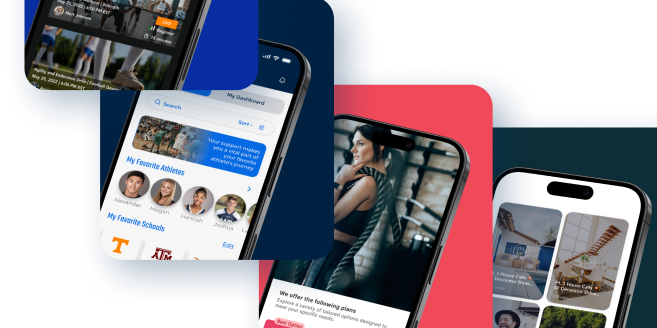
Ratings shape both where you rank and whether people tap. Prompt happy users to rate at a natural high point (after a win in the app, never mid-task) using the native rating prompts both stores require, and respond to reviews to show the listing is maintained. Localization multiplies reach: translating metadata and screenshots into priority markets opens search traffic competitors ignore. GaRGaR shows what a tight listing earns, in its first three months working with Chop Dawg, GaRGaR earned a near-perfect 4.8-plus rating across the Apple App Store and Google Play Store alongside more than 1,000 new recommendations a day, with users praising its authenticity and design. Strong ratings plus clear screenshots equal a higher conversion rate, which compounds every download.
Frequently Asked Questions
What is App Store Optimization (ASO) in simple terms?
ASO is improving your app’s store listing so it ranks higher in search and converts more viewers into downloads. It covers your keywords, title, subtitle, screenshots, preview video, ratings, and localization. Think of it as search engine optimization for the Apple App Store and Google Play Store.
How is ASO different on the Apple App Store versus Google Play Store?
Apple uses a hidden keyword field and does not index your description, so every keyword must fit the name, subtitle, and that field. Google indexes your full long description, so natural keyword use throughout the text drives ranking. Optimize each store separately rather than copying one listing to both.
How many keywords should I target?
Focus on a tight set of high-intent terms rather than stuffing dozens. Pair your brand with one strong keyword in the title, then cover long-tail phrases across the subtitle and keyword field or description. Specific phrases face less competition and attract users more likely to install and stay.
Do ratings and reviews really affect ranking?
Yes. Both stores treat ratings as a ranking and conversion signal, and a steady stream of recent, positive ratings carries more weight than a large but stale total. Prompt satisfied users at natural high points and respond to reviews to keep your listing healthy.
How long does ASO take to show results?
Metadata changes can move rankings within days to a few weeks as the stores re-index and gather conversion data. ASO is iterative: change one element, measure tap-through and install rate, keep the winner, and test the next. Treat it as ongoing maintenance, not a single setup task.
Is paid advertising a replacement for ASO?
No, they work together. Paid installs can drive early volume, but strong organic ASO lowers your blended cost per user and keeps downloads flowing when ad budgets pause. A well-optimized listing also converts your paid traffic better, so every ad dollar goes further.
Want Your App to Get Found and Downloaded?
ASO rewards teams that treat the listing as seriously as the product, and that is how we build. Since 2009, Chop Dawg has launched 500+ products used by more than a billion people, with 92% of partners returning for their next build. We are a partner, not an agency: you own your code and intellectual property, and you work directly with the senior people doing the work, no middleman. We are United States-headquartered and United States-led, with American product, project management, and senior design, development, and marketing leadership alongside an in-house Brazilian design team and in-house development and quality-assurance teams in Pakistan and India. Go fully-American for regulated work or choose a cost-effective United States-plus-offshore blend at the same quality and timelines; either way you budget with fixed-monthly pricing. Our work has earned 300+ five-star reviews across trusted directories like Clutch, GoodFirms, G2, Google, and TopDevelopers. Building a great app is only half the job; you still need to market, price, and distribute it well. Whether you are a startup chasing your first downloads or an established company trying to climb the rankings for an app already live, book your free 45-minute consultation and let’s get your app ranking.


 21 Min